

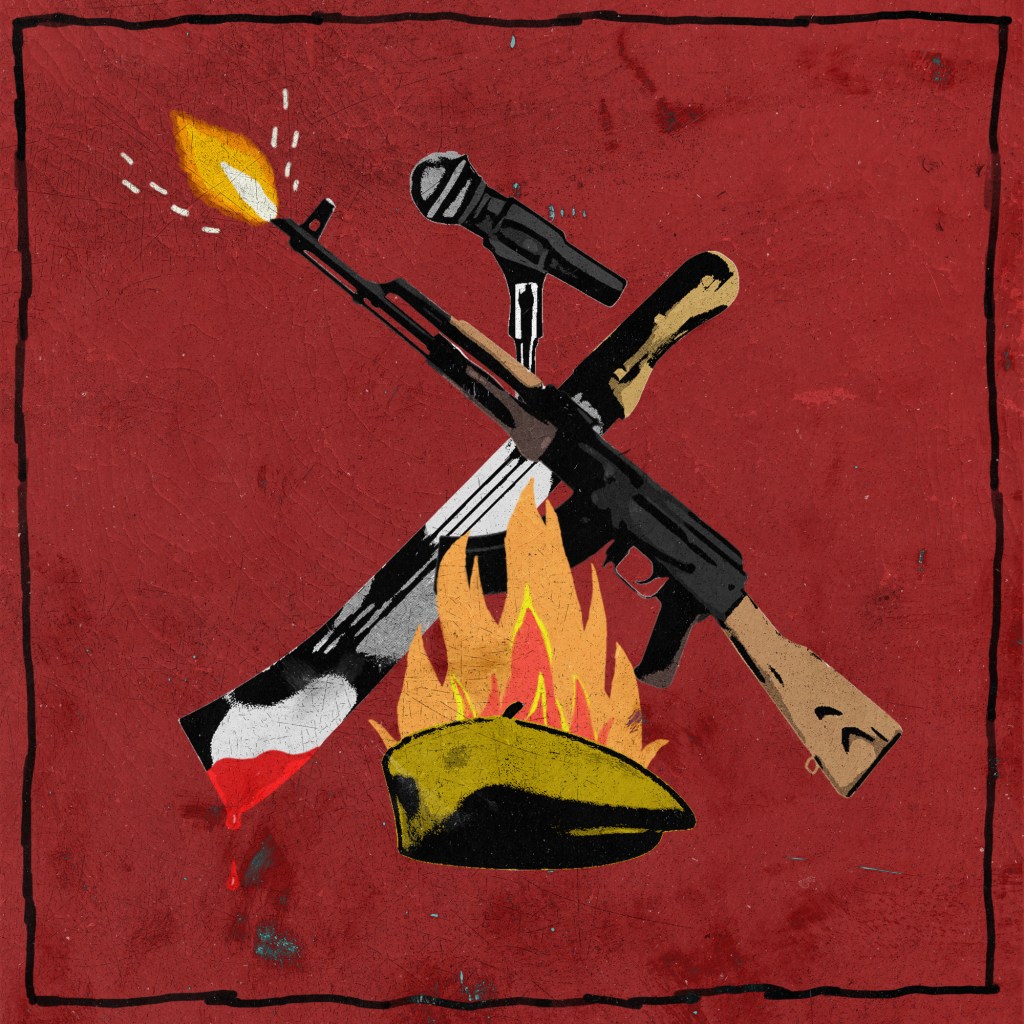
When Fela Anikulapo-Kuti said “Music is a weapon of the future” in that famous 1982 documentary“Fela Kuti: Music Is The Weapon”, he envisioned music as a tool for social change, but today, his countrymen have twisted this message, engaging in brawls under neon lights and the full glare of hundreds of phone cameras. Music now primarily serves as entertainment, with its business linked to shadowy figures, raising questions about the direction and influences shaping its practitioners.
One can imagine Fela watching the skirmish between Burna Boy and Wizkid-affiliate Michael Babatunde ‘DJ Tunez’ Adeyinka at the April 6 edition of the Hard Rock Cafe-domiciled weekly Afrobeats dance party Obi’s House with amusement and then a vigorous head shake. Conflicting reports abound as to the reason for the fight, but what can be established as seen in a specific video making the rounds is that they, in fact, engaged in fisticuffs .
In the hours since, DJ Tunez has made a series of X posts in relation to the event, including one where he directly calls out Burna Boy, “THIS N**GA BURNA BOY! ALL SIGNS OF WEAKNESS,” amid other posts referring to being hit in the back of his head and fighting off multiple individuals from Burna’s camp. On the other hand, Burna can be seen in a now-viral Snapchat video dancing and singing along to Money Constant, DJ Tunez’s 2025 hit single featuring South African DJ Maphorisa, Wizkid, and Mavo. In the video, seemingly taken around 1:35 AM on Tuesday, Burna prances around in a white towel, changing the lines “Ogbafia dey my side” to “Ogbafia, dey for ground”; a probable reference to DJ Tunez, who donned a black ‘OGBAFIA’-inscribed shirt on the night of the skirmish.
Wizkid also posted a barrage of disses aimed at Burna Boy, with references to his Twice As Tall Executive Producer and convicted hip-hop mogul Puff Daddy. The matter escalated with a late night Instagram live session featuring Burna Boy and Shallipopi, in which the former admitted to slapping DJ Tunez. Wizkid responded with a series of now deleted tweets. What happens next remains to be seen.
Beef and physical clashes aren’t new in the Nigerian music industry, and ordinarily, such events should be undeserving of additional analysis. Physical clashes of this nature take place at clubs, concerts—and on the rare occasion, hair salons—too commonly for anyone to pay sustained interest. The real story is what they reveal about the underbelly of the music industry. For this particular skirmish, commentators acknowledged the possible involvement of confraternities, i.e. cult groups. Separate posts across social media, including a questionable X post by the controversial so-called ‘anti-cultism tracker’, Naija Confra, hint at this subtext.
Of greater contention is the fact that such allegations are not novel to the ecosystem. Earlier in January, rapper Naira Marley posted: “We no reach 5 weh never join cult for this [music] industry. Person whe put u for cult self dey carry police escort up and down.” In June 2024, 2010s street-pop icon Terry G made similar posts decrying the pervasiveness of cultism in the industry. In his words, there had always been cultists in the industry without any violence. He further claimed that the in-fighting had scared away many young artists.
Among fans, debates about artists with confra ties have been a staple on social media platforms for many years. Facebook is ground zero for these speculations, with entire pages dedicated to listicles and as-told-to history, complete with pictures of these artists in the associated colours and insignias. This is not like the Illuminati craze earlier in the millennium, where repercussions had little bearing on the lives of fans and society as a whole. Cultism is a tangible problem in Nigeria. Lives are lost every other day to cult clashes over here. One need not have read Eghosa Imasuen’s Fine Boys or watched any of the tens of Old Nollywood films about cultism to grapple with the true cost to young Nigerians. To then have these sustained links speaks to a dysfunction gnawing at the proverbial roots. The tree keeps weakening and toxins spread out to the branches. Who will eat the fruit?
About three years ago, when alleged cultists attacked rapper Odumodublvck and singer and ex-Lagos State University (LASU) student Bella Shmurda at a 14th July concert, there was discourse around the menace constituted by these groups. Odumodublvck would later use a recording of this incident on his song MC OLUOMO, a lighthearted repurposing of the situation. But while that can still be excused away as unrelated to the artists, other actions by some of these superstars plead for re-examination. On July 7, 2025, notably the celebration day of the Black Axe/Aye Confraternity—in recent years, the Neo Black Movement of Africa (NBM), has dissociated itself from Black Axe—artists Davido and Zlatan made controversial X posts linked to the group.
In Davido’s case, it was the phrase “Happy Metal.” Zlatan posted the “7/7” moniker alongside Black and Yellow heart emojis. The internet responded with vim, but not before several users with similar posts and symbolism had expressed solidarity. Davido would eventually respond to a critical comment about his post with the dismissive “That one nah your papa business.” In the heat of an October 2024 row with internet personality and rapper Speed Darlington, Burna Boy famously made the post “7 is Real,” just about thirty minutes before posting “Who’s missing?”, and coincidentally, as the latter had just been announced missing, before he was later confirmed to have been detained on charges of defamation. Again, like with Zlatan and Davido, there were speculations about the “7 is Real” post being tied to these violent groups.
These episodes are not conclusive proof of any cult ties. To be honest, we would rather there be no concrete links, and such statements remain mere speculation among fans and other stakeholders. There just doesn’t appear to be smoke without fire. And even if it’s just fans and overzealous confraternity boys stoking the flames, there should at least be dissociations by Nigerian artists. It’s almost like how commentary on Nigerian music being funded with proceeds from cybercrime existed for years and was waved aside by many as unfounded claims. Not until older artists like MI Abaga validated the sentiment did many pay attention. Fraud money still exists within the ecosystem, but the exclusivity veil has been lifted. A similar unravelling is required for this cultism subject.
Expecting a puritan music industry in a secular country like ours is naive. Fela, in his spectral glory, wouldn’t demand such an outcome. Yet, in all of this reckoning with pragmaticism, it is still essential to reject these ties as normative. When even the average music listener can tell there’s subtext to statements and clashes, there’s a problem. Again, clashes and differences occur everywhere in the world, so much so that the American gospel scene, of all places, has its fair share. But for the love of Abami Eda, keep out the violence and cut off those confra ties. It’s a silly business that rubs off on younger artists.
The full “Music is the weapon” quote includes two other lines relevant to today’s artists: “Music is the weapon of the progressives. Music is the weapon of the givers of life.” In times of strife like these, when a country of over 180 million has chosen music as a form of escape, and the lives of artists as personal matters, choosing to fuel this negativity is a poor man’s idea of status.
